Both a wax 3D printer and a wax injector produce wax patterns for lost-wax casting, but they work in very different ways. Understanding the difference helps you decide where each one earns its place in your workshop.
How a wax injector works
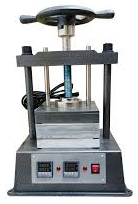
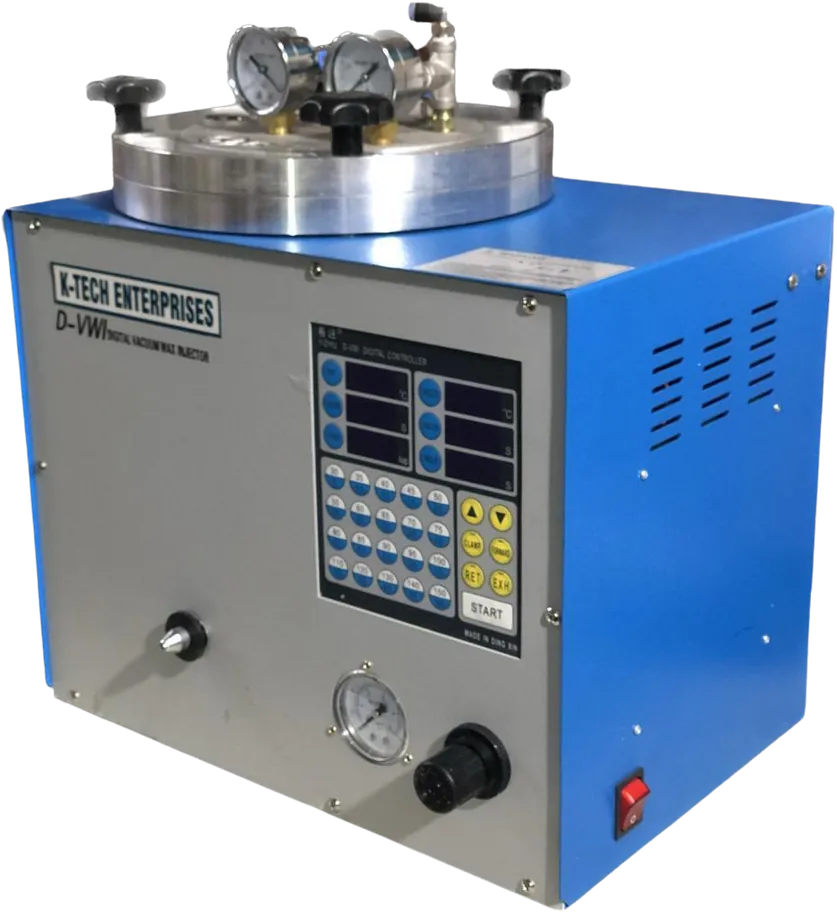
The traditional route starts with a metal master model. A vulcanizer turns that master into a rubber mould, and a wax injector fills the mould with molten wax under vacuum and air pressure. Once the mould exists, each extra pattern takes only seconds, which makes injection ideal for repeating proven designs in volume.
How a wax 3D printer works
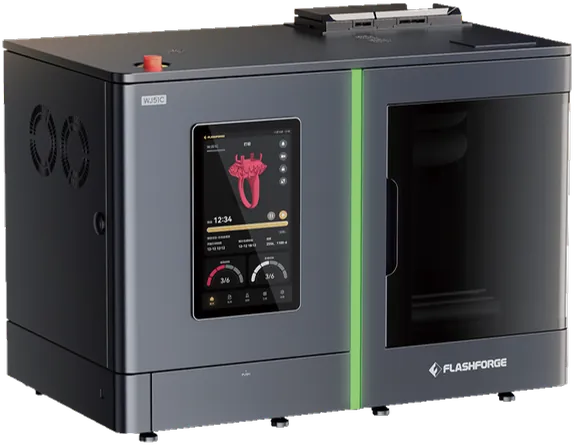
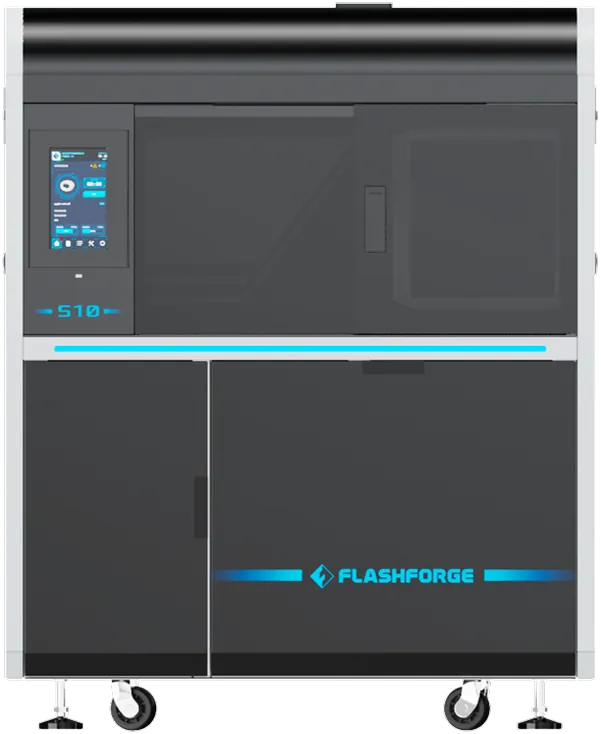
A wax 3D printer builds the pattern directly from a CAD file, layer by layer, in castable wax with a dissolvable support. There is no master model and no rubber mould: every pattern on the platform can be a different design. Printers such as the Flashforge WJ51C print 15 µm layers with about ±0.04 mm per 20 mm accuracy.
Side-by-side comparison
| Factor | Wax 3D printer | Wax injector |
|---|---|---|
| Starting point | CAD file | Master model + rubber mould |
| New design lead time | Print directly, no mould needed | Needs a master and a vulcanized mould first |
| Design freedom | Undercuts, hollow and filigree designs | Limited by what the rubber mould can release |
| Cost per extra copy | Wax material and print time | Very low once the mould exists |
| Best for | New collections, custom and one-off pieces, complex designs | Repeat production of proven designs |
When a wax 3D printer is the better choice
- You launch new designs often and want to skip master-making and mould costs.
- You sell custom or personalised jewellery where every piece is different.
- Your designs have undercuts, hollow sections or fine filigree that rubber moulds struggle with.
When a wax injector is the better choice
- You produce the same bestselling designs in large numbers.
- You already have a library of rubber moulds.
- You want the lowest possible cost per repeat pattern.
The smart answer: use both
Many workshops print new designs on a wax 3D printer, cast them, and once a design proves popular, make a rubber mould from the cast master for high-volume injection. This combines fast design changes with low-cost repeat production. For finishing printed wax before casting, LINERASE™ removes remaining layer lines in seconds.
Explore our wax 3D printers and casting and moulding equipment, or call +91 7021118534 to plan the right setup.