LCD and DLP are the two main resin 3D printing technologies used by jewellers and dental labs. Both cure liquid photopolymer resin with 405 nm light, one layer at a time, but they create that light pattern differently, which affects resolution, upkeep and build size.
How LCD (MSLA) printers work
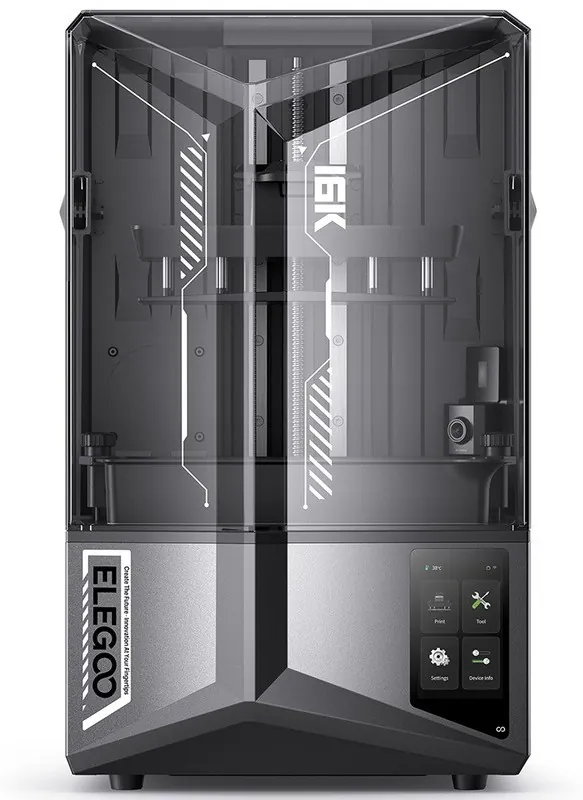
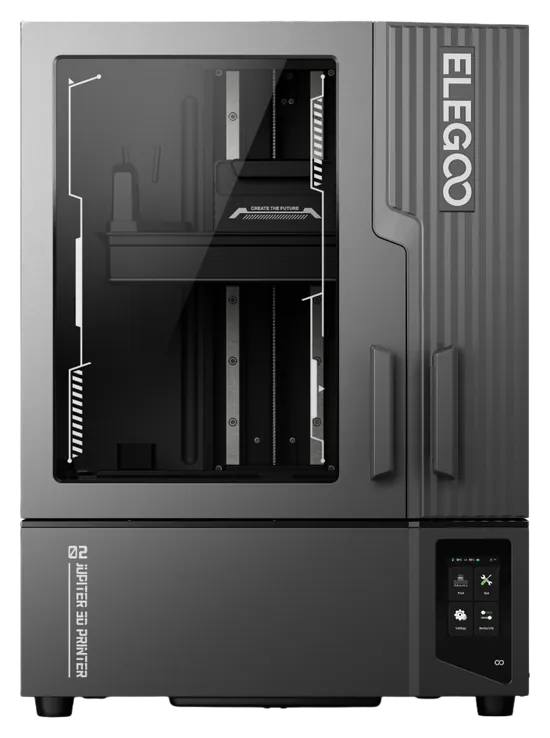
An LCD printer shines a uniform light source through an LCD screen that acts as a mask, letting light through only where the layer should cure. Higher-resolution screens give smaller pixels: the ELEGOO Saturn 4 Ultra 16K has a 14 × 19 µm XY resolution, and large-format models such as the Jupiter 2 offer a 302 × 162 × 300 mm build volume.
How DLP printers work
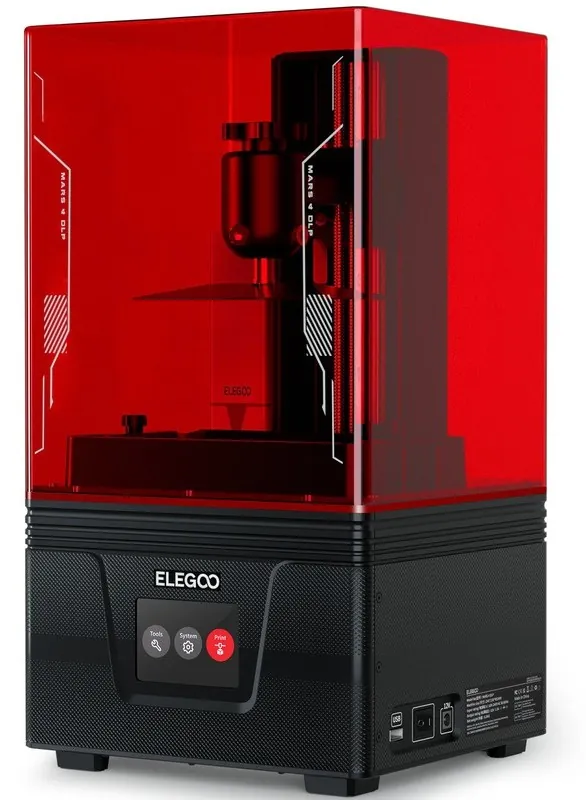
A DLP printer uses a digital projector to project each layer onto the resin. Projectors have a long life: the ELEGOO Mars 4 DLP projector is rated for 20,000+ hours, about ten times longer than an LCD screen, and the printer uses only about 12 W.
LCD vs DLP at a glance
| Factor | LCD (MSLA) | DLP |
|---|---|---|
| Light source | LED array through an LCD mask | Digital projector |
| Resolution | Very high on 12K–16K screens | Fixed by the projector (e.g. 2560 × 1440 on the Mars 4 DLP) |
| Build volume | Small to very large | Usually compact |
| Light source life | LCD screen is a consumable | Projector rated for 20,000+ hours |
| Energy and noise | Moderate | Very low (about 12 W, under 48 dB on the Mars 4 DLP) |
| Typical use | Detailed models, large batches, big parts | Small precise parts with low upkeep |
Which is better for jewellery?
For ring and pendant masters with fine detail, a high-resolution LCD such as a 16K printer gives very smooth surfaces and room for many pieces per plate. A DLP printer suits workshops that want consistent results with minimal maintenance and low running cost. For production casting in wax, consider a dedicated wax 3D printer instead.
Which is better for dental labs?
Dental labs print models, trays and guides in batches, so build area and throughput matter. Larger LCD printers fit more models per print, while DLP gives dependable accuracy with long projector life. Whichever you choose, use resins suited to your application and follow the resin maker's washing and curing instructions.
Don't forget post-processing
Every resin print needs washing and curing. Plan for IPA (isopropyl alcohol), an IPA recycling machine to cut solvent costs, and a UV curing box for consistent final hardness.
Compare all LCD and DLP resin 3D printers or call +91 7021118534 for a recommendation.