Investment casting, also called lost-wax casting, is how most fine jewellery is made. A wax (or resin) pattern is surrounded by a heat-resistant investment, burnt out to leave a cavity, and filled with molten metal. Here is the full process, step by step.
Step 1: Make the patterns
Patterns come from two routes. New designs are printed directly from CAD on a wax 3D printer. Repeat designs are injected into rubber moulds made on a vulcanizer using a wax injector, whose vacuum removes trapped air before injection. Clean any print lines on printed wax with LINERASE™.
Step 2: Build the wax tree
Patterns are attached by sprues to a central wax trunk on a rubber base, forming a "tree". Spacing and sprue placement control how metal flows, so plan the tree for the alloy and the casting method.
Step 3: Invest the flask
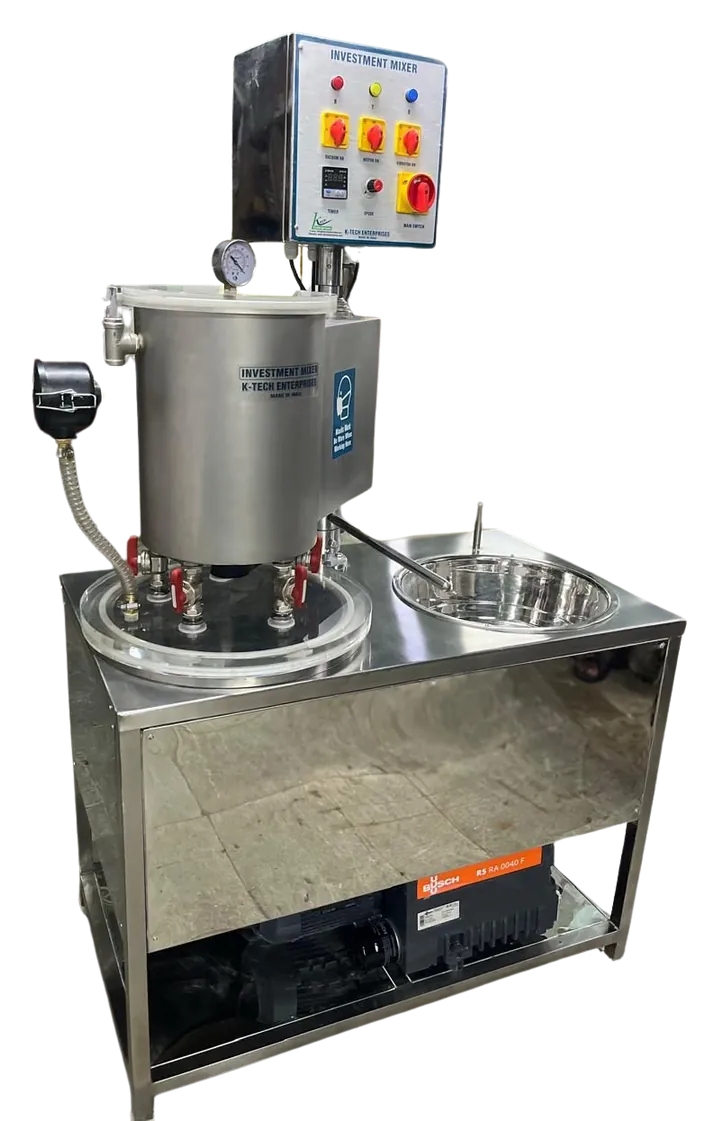
A steel flask is placed over the tree and filled with investment slurry. Mixing and pouring under vacuum removes air bubbles that would otherwise become metal nodules on the casting. An investment mixer embeds the tree under vacuum for a uniform, nodule-free slurry, and a debubblizer removes remaining air from the slurry.
Step 4: Burnout
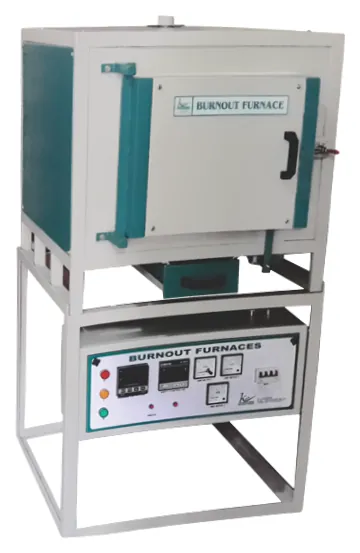
Once the investment sets, the flask goes into a burnout furnace. A programmed temperature profile melts out and burns off the wax, then cures the investment and brings the flask to casting temperature. A digital PID controller with stored profiles keeps each cycle repeatable.
Step 5: Melt and cast
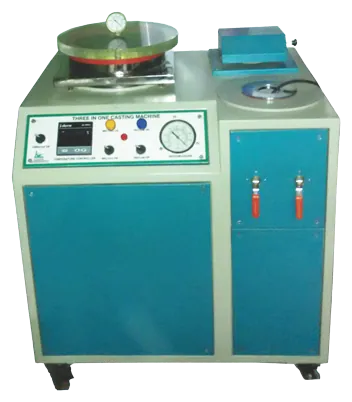
Metal is melted in a gold induction melter or the melting chamber of an all-in-one machine and cast into the hot flask. Vacuum casting machines pull metal into fine detail; pressure casting machines add pressure for the densest results.
Step 6: Quench and divest
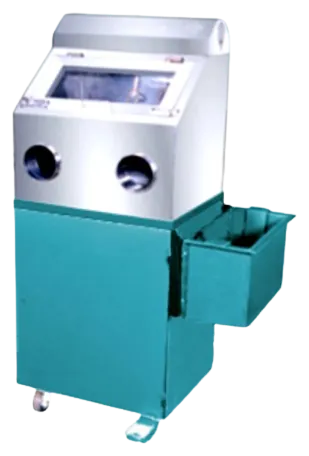
After the metal solidifies, the flask is quenched in water, which breaks up most of the investment. A water jet machine then blasts away the rest from fine details, and a settling tank traps investment and metal residue from the wash water.
Step 7: Cut, clean and finish
Pieces are cut from the tree, sprues are ground off and surfaces are finished. Typical finishing steps include a magnetic polisher for bright, even polishing in hard-to-reach areas, a polishing station with dust collection, electrolytic polishing for complex shapes, and a steamer or ultrasonic cleaner for final cleaning.
Common casting problems and their causes
| Problem | Common cause |
|---|---|
| Small metal balls (nodules) | Air bubbles in the investment: mix and pour under vacuum |
| Incomplete fill | Flask or metal too cold, or sprues too thin |
| Rough surface | Incomplete burnout or investment breakdown |
| Porosity | Poor sprue design, gas in the melt or insufficient vacuum or pressure |
Need help setting up a complete casting line? Explore our casting equipment or call +91 7021118534.