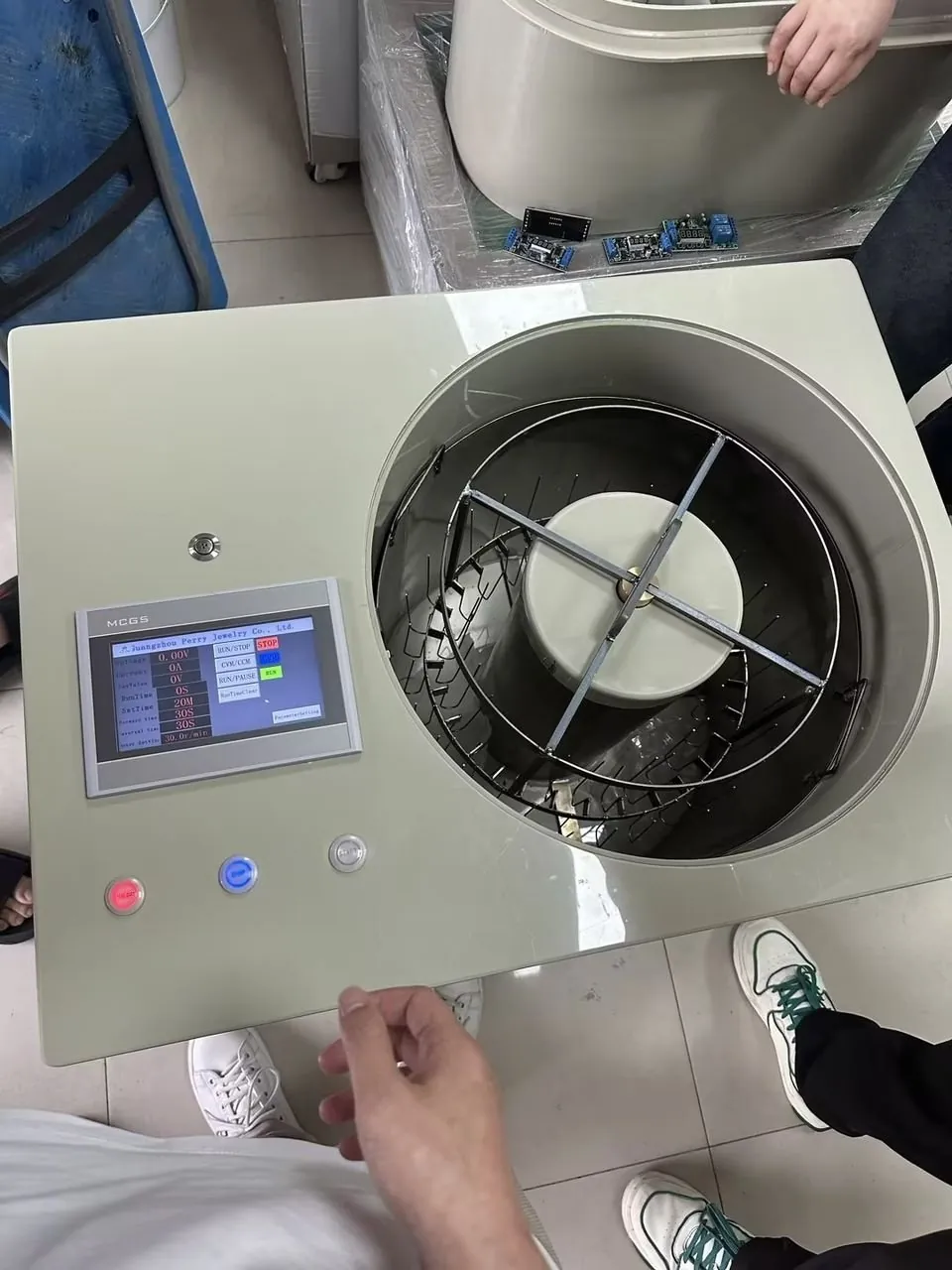
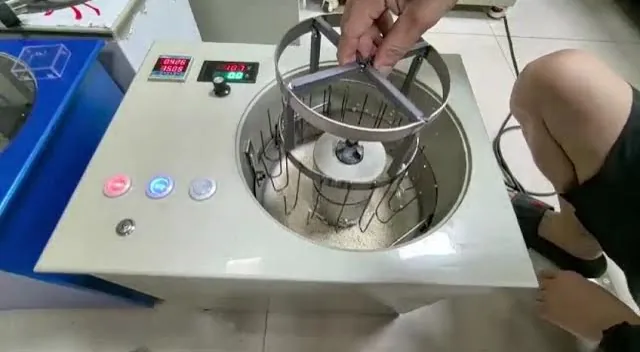
An electrolytic polishing machine smooths and brightens jewellery using an electrolyte and controlled electric current instead of only abrasive wheels. It is especially useful for cast pieces with complex shapes, filigree and inner surfaces that are slow or impossible to reach by hand.
How electrolytic polishing works
Pieces hang on the machine's hooks in an electrolyte bath and are connected as the anode. When current flows (the SPB machines run on AC 220 V with a DC 0–15 V output), material is removed preferentially from tiny peaks on the surface, so roughness levels out across the whole piece, including recesses and dead corners. Abrasive media in the bath assists the smoothing.
Benefits over manual polishing
- Reaches every corner: polishes dead corners and inner surfaces that hand tools cannot reach.
- Batch processing: polishes many pieces at once, from 20 pieces per batch on a small machine to 138 on a large one.
- Consistent results: every piece in the batch gets the same finish.
- Lower cost per piece: much less labour per piece than manual grinding.
Which metals can be polished?
The SPB series works with copper, silver and K gold (karat gold alloys). It is not suitable for pure gold or platinum. Each metal uses its own electrolyte ratio, listed in the machine specifications.
Choosing the right model
| Model | Batch size | Power | Best for |
|---|---|---|---|
| SPB-GR3 (small) | 20 pcs | 1 kW, max 50 A | Small workshops |
| SPB-GR2 (medium) | 60 pcs | 2.3 kW, max 150 A | Most jewellery factories |
| SPB-GR1 (large) | 138 pcs | 4.5 kW, max 300 A | Big production |
| SPB-GRF3-1 (three-in-one) | 20 × 3 pcs | 1 kW, max 50 A | Polishing three different metals at once |
Where it fits in your workflow
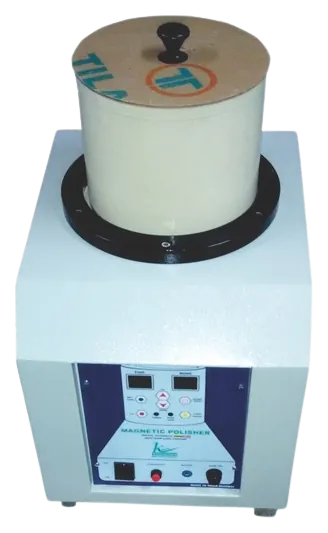
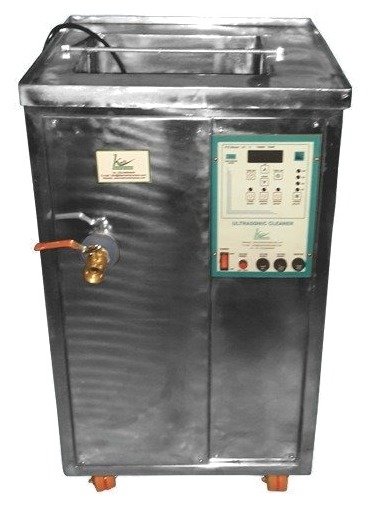
Electrolytic polishing usually follows casting, divesting and sprue removal. Many workshops combine it with a magnetic polisher for bright finishing of small parts and an ultrasonic cleaner or steamer for final cleaning. A magnetic stirrer helps prepare and mix polishing solutions evenly.
Safety and maintenance
Use the electrolyte recommended for each metal, follow the stated metal-to-electrolyte ratios, work in a ventilated area with suitable protective equipment and replace the electrolyte and abrasive media as specified to keep results consistent.
Compare our electrolytic polishing machines or call +91 7021118534 for help choosing a size.